
How to sell variable-weight products on Shopify using Downpay deposits
Learn how to sell weight-based products on Shopify without losing margin. Use Downpay to price by actual weight and automate final balance collection.
Using Downpay to charge by weight accurately
Merchants who sell products by weight often struggle with Shopify’s fixed-price model. Food items such as produce, meat, and fish vary from round numbers when they're prepared and packed. This leads to inconsistent margins and extra admin work.
With a fixed price upfront, any extra weight becomes a merchant cost. And if the order is below weight, customers can feel cheated.
This means that merchants lose money or have to burden customers and staff with multiple transactions.
The Shopify partial payments app Downpay solves this problem with a simple deposit workflow that lets merchants adjust the order total based on the actual weight before collecting the remainder.
Why weight-based pricing is difficult on Shopify
Shopify requires a single price per variant. That price cannot reflect the final weight because the true value is only known after staff weigh the prepared item during fulfillment. This creates two main challenges:
- The price collected during checkout is an estimate
- Staff discover the real weight later and must modify the order
How Downpay makes weight-based selling possible
Downpay, a whitelabel split payment solution created by Shopify alumni, allows the store to charge a deposit during checkout and store the customer’s payment method.
Once the product is weighed, staff can adjust the order total and then collect the balance, manually or automatically.
Customers stay within the brand's Shopify checkout and merchants stay in the Shopify admin.
Customer experience
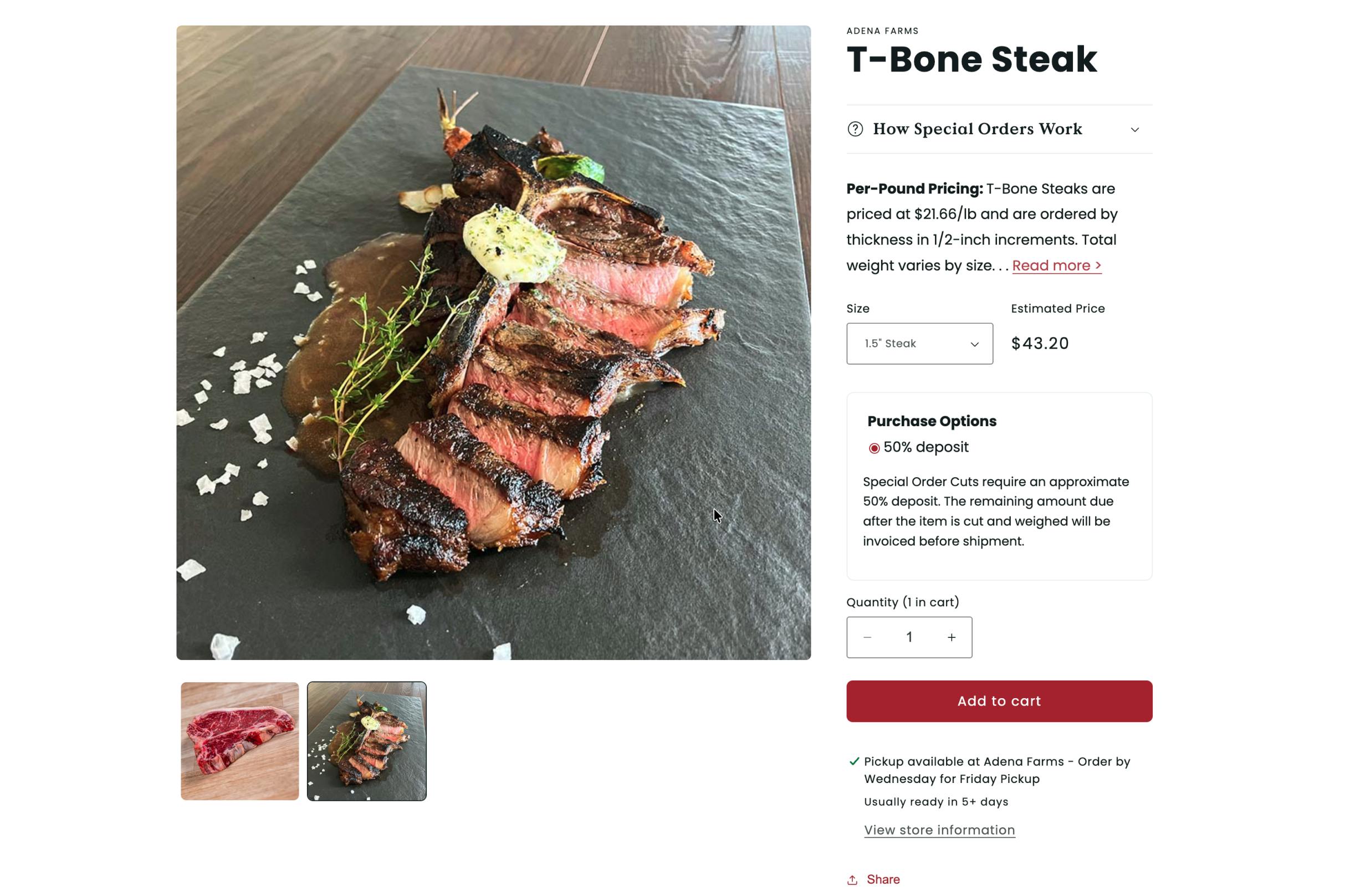
- On the product page, the customer selects a number of units. The product page explains that the deposit covers part of the order and that the balance will reflect the actual weight.
- In the cart, the customer sees the deposit and estimated balance amounts.
- At checkout, the customer pays the deposit amount and awaits any adjustment at fulfillment.
This sets expectations early, which improves trust and reduces follow-up questions.
Adena Farms uses Downpay to provide exactly this experience:
Merchant workflow
Once the product is weighed, staff update the order:
- If the weight is higher, they add a custom line item for the extra weight
- If the weight is lower, they apply a discount to reduce the original line item cost
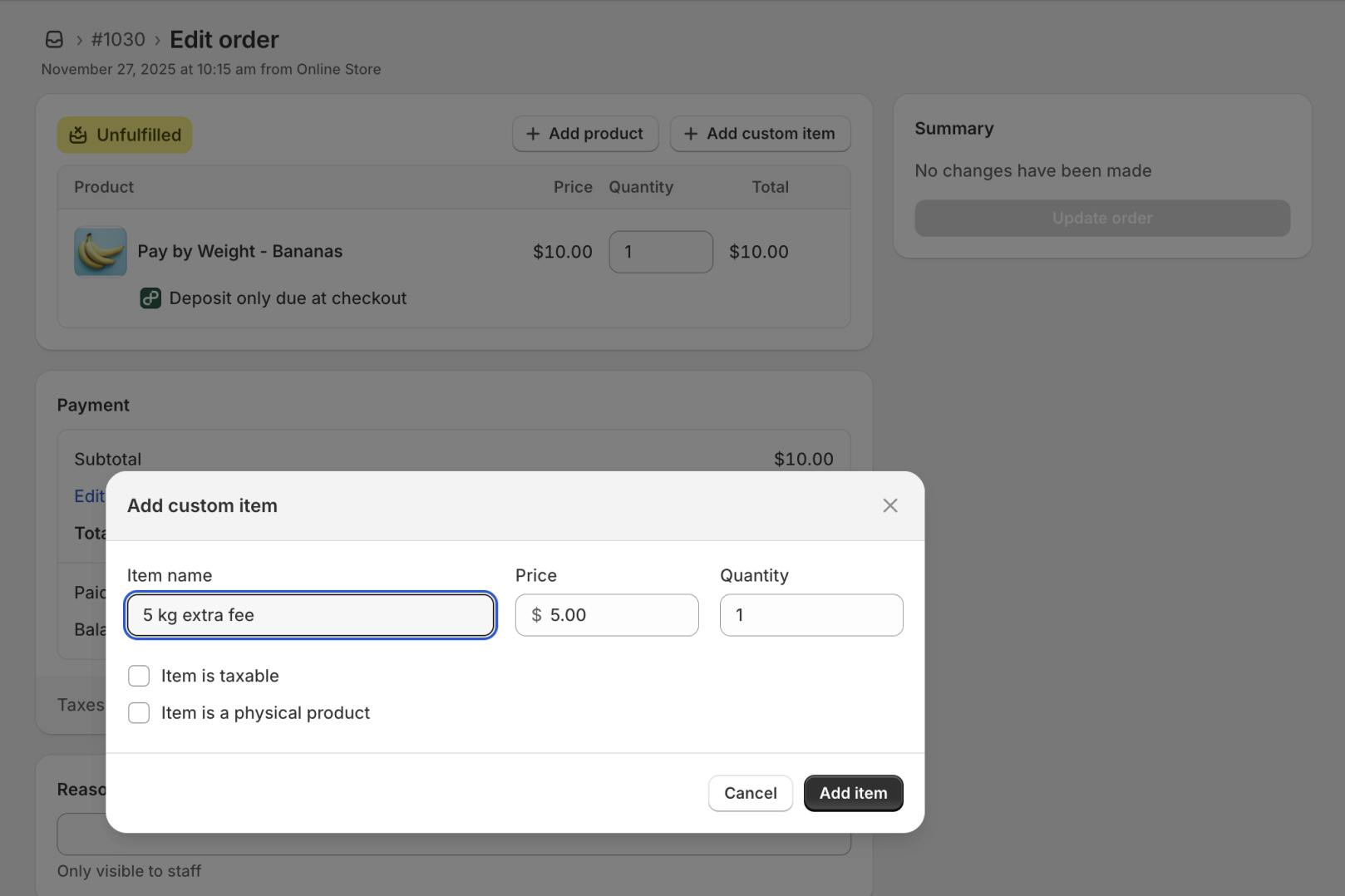
When the order reflects the correct amount, the remaining balance can be collected in one of three ways:
- Charging the stored card
- Sending an updated invoice
- Taking payment using POS during pickup
Benefits for weight-based businesses
Accurate pricing
Every order reflects its true weight, which protects margin on produce, meat or seafood.
Simple communication with customers
The deposit workflow avoids confusion. Shoppers understand they pay a portion today and the balance after the order is finalized.
Consistent payments
The payment method is stored securely. The final balance can be charged in three flexible ways, depending on the store's needs.
Smooth internal workflow
Staff weigh the product, adjust the line items and complete payment with a single action.
Flexible adoption
Fruit and vegetable boxes, butcher counters and farm stores can all use the same model.